
What if one of the most powerful abilities we possess isn’t something we need to acquire—but something we’ve simply never been taught to recognize?
Every second of every day, your brain processes an extraordinary amount of information. It registers the pressure of your feet against the floor, the temperature of the air on your skin, the subtle shift in someone’s facial expression before they speak, the change in the atmosphere after an uncomfortable conversation, or the faint scent of rain before the first drop falls. Most of this information never reaches conscious awareness.
Instead, your nervous system quietly filters, organizes, and prioritizes what it believes is most important, allowing you to move through the world without becoming overwhelmed. It’s an elegant system—one that has evolved to keep us safe and functioning efficiently. But it also raises an intriguing question:
What else might our nervous system be detecting before we’re consciously aware of it?
That question eventually became one of the foundations of Human Resonance Mechanics.

Our goal was never to prove extraordinary claims or persuade people to adopt a particular belief system. Instead, we wanted to approach the subject the same way many scientific discoveries begin: with curiosity. Throughout history, progress has often started with someone noticing something others overlooked and asking a simple question. Why do magnets attract? How do birds navigate across continents? What causes the stars to move across the night sky? Before there were explanations, there were careful observers.
Human Resonance Mechanics was built on that same spirit of exploration.


From the very beginning, we established a simple guiding principle: observe before you explain. Before deciding what something means, first notice that it happened. Before reaching for certainty, become curious. Separate the signal from the story your mind immediately wants to tell.
This distinction may seem subtle, but modern neuroscience suggests it is incredibly important.
Researchers now understand that perception is not a passive recording of reality. Rather than simply receiving information from the outside world, the brain is constantly generating predictions, comparing those predictions with incoming sensory information, and constructing our conscious experience from that interaction. In other words, we don’t experience the world exactly as it is—we experience the world through a dynamic conversation between sensation, memory, expectation, and interpretation.
That means two people can experience the very same event and come away with remarkably different conclusions.
It also suggests that beneath every interpretation lies something worth paying attention to: the raw sensory signal itself.
Think about everyday life. You feel your phone vibrate in your pocket, only to discover it never did. You walk into a room and immediately sense tension before anyone says a word. You find yourself feeling calm around one person and uneasy around another long before you can explain why. Whether those impressions ultimately prove accurate or not, they remind us that our brains and bodies are continuously processing information outside of conscious awareness.
The interesting question isn’t whether every feeling is correct.
The interesting question is whether we can become better at noticing those initial sensations before our minds rush to explain them.
That is a question we can investigate.
It doesn’t require abandoning skepticism. It doesn’t ask anyone to suspend logic or accept extraordinary claims. Instead, it invites us to become better observers of our own experience and to examine, with honesty and curiosity, what we notice.

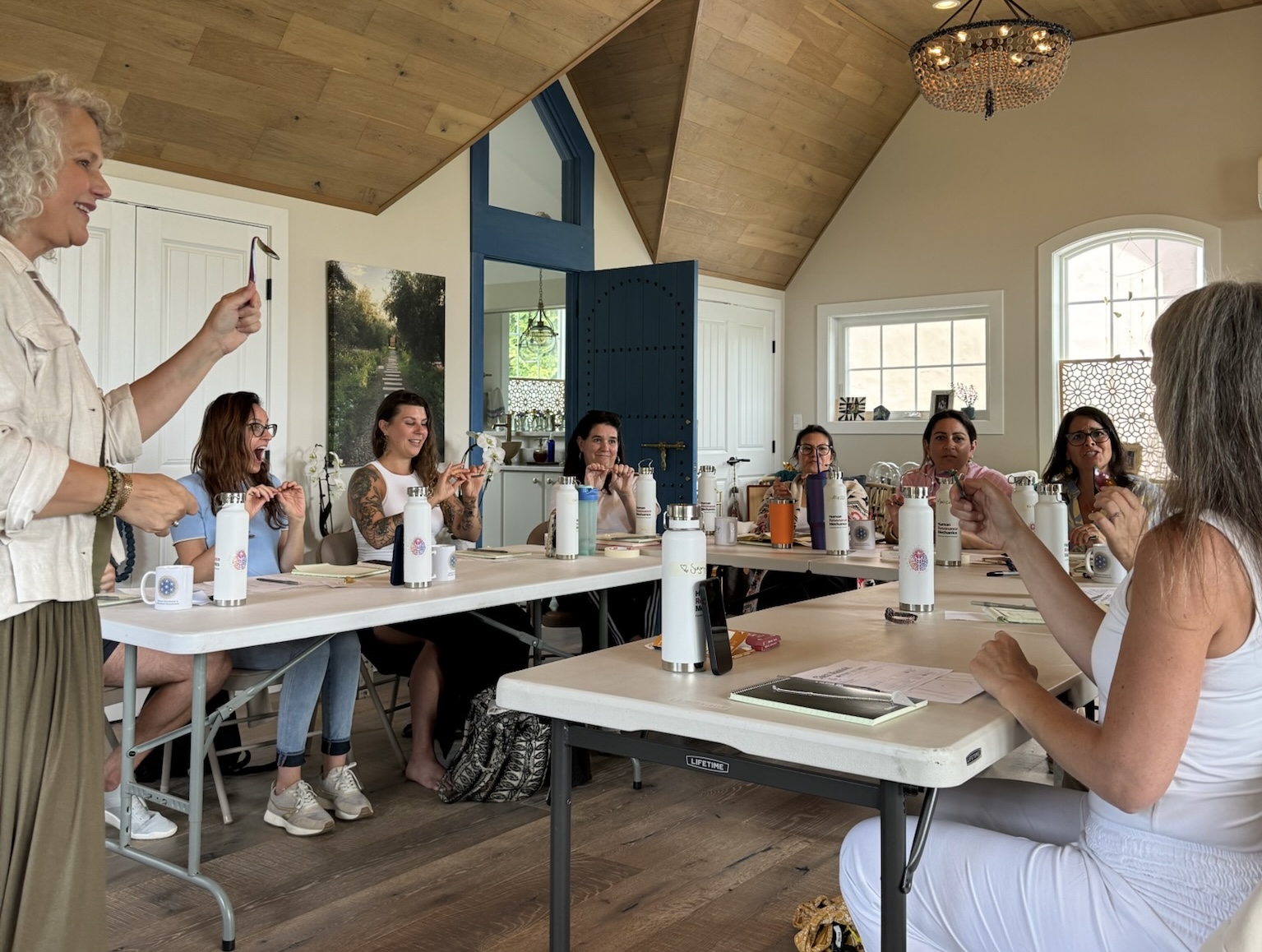
Those questions became the foundation for a three-day Human Resonance Mechanics workshop that brought together participants from diverse backgrounds to explore attention, perception, and human awareness through structured exercises and direct experience. Rather than teaching people what to think, we focused on how to observe. Participants practiced distinguishing raw sensation from interpretation, refining their attention, comparing observations, and learning to recognize subtle patterns that often go unnoticed in everyday life.
As the workshop unfolded, something interesting began to emerge.
People weren’t simply becoming more confident. They were becoming more observant.
Descriptions became richer. Sensory distinctions became more nuanced. Participants began noticing details they had overlooked only a day before. In many cases, their ability to describe what they were experiencing improved before their confidence in those observations caught up.
That pattern would become one of the most compelling themes of the entire weekend.
Because perhaps developing perception isn’t about acquiring a new ability at all.
Perhaps it’s about learning to recognize signals that have been present all along—and becoming just a little more careful about the stories we attach to them.
The findings from our workshop didn’t answer every question we had.
If anything, they raised even better ones.
And that’s exactly where meaningful exploration begins.

Ready to Explore It for Yourself?
Reading about perception is one thing. Experiencing it firsthand is something entirely different.
Our three-day Human Resonance Mechanics workshop is designed as a playground for exploring attention, perception, and human potential through observation, experimentation, and direct experience. Together, we’ll investigate how your nervous system processes information, practice refining your awareness through engaging hands-on exercises, and explore the fascinating relationship between detection, differentiation, and interpretation.
Whether you’re naturally curious, scientifically minded, or simply interested in understanding yourself on a deeper level, you’ll leave with practical tools you can apply far beyond the workshop—in your relationships, decision-making, creativity, and everyday awareness.
You don’t need prior experience. You don’t need to believe anything. All you need is a willingness to observe with curiosity.
If this article sparked something in you, perhaps that’s the best place to begin.
Join us at our next Human Resonance Mechanics workshop and discover what becomes possible when you learn to observe before you explain.
Leave a Reply